
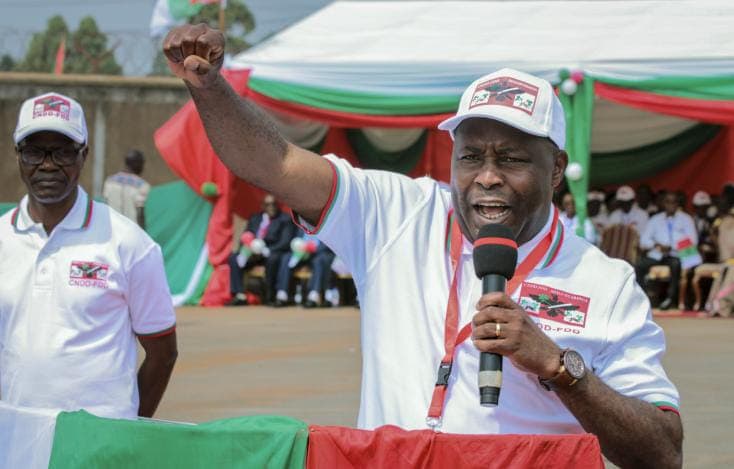
The crisis shaking the east of the Democratic Republic of the Congo (DRC) cannot be reduced to a confrontation between Kinshasa and local rebel movements. It has become the theatre of a complex entanglement of opaque regional interests, in which security agendas intersect, fund one another and sustain one another. At the heart of this architecture of instability, Burundi’s role under the presidency of Évariste Ndayishimiye proves central, destructive, and heavy with humanitarian and political consequences.
While the Congolese state’s coffers are emptied to feed an opaque military alliance, civilians — particularly the targeted communities of the high and middle plateaux of Minembwe — pay the highest price for a strategy of cross-border predation. This investigation, documented for Daraja Média, decodes the hidden dynamics, the ideological complicities and the astronomical financial flows that keep eastern DRC on a conflict drip.
Ideology and the ghosts of 1994: the path of Évariste Ndayishimiye
To understand Évariste Ndayishimiye’s current involvement in the Congolese crisis, it is essential to look into the historical and ideological roots of his political and military career.
A Hutu refugee in Rwanda under the Habyarimana regime
During the 1990s, as the Great Lakes region caught fire amid ethnic tensions, Évariste Ndayishimiye — a rising figure in the nascent Burundian Hutu rebellion — took refuge in Rwanda. At that time Rwanda was ruled with an iron fist by President Juvénal Habyarimana, a Hutu leader whose ethno-nationalist ideology structured the region.
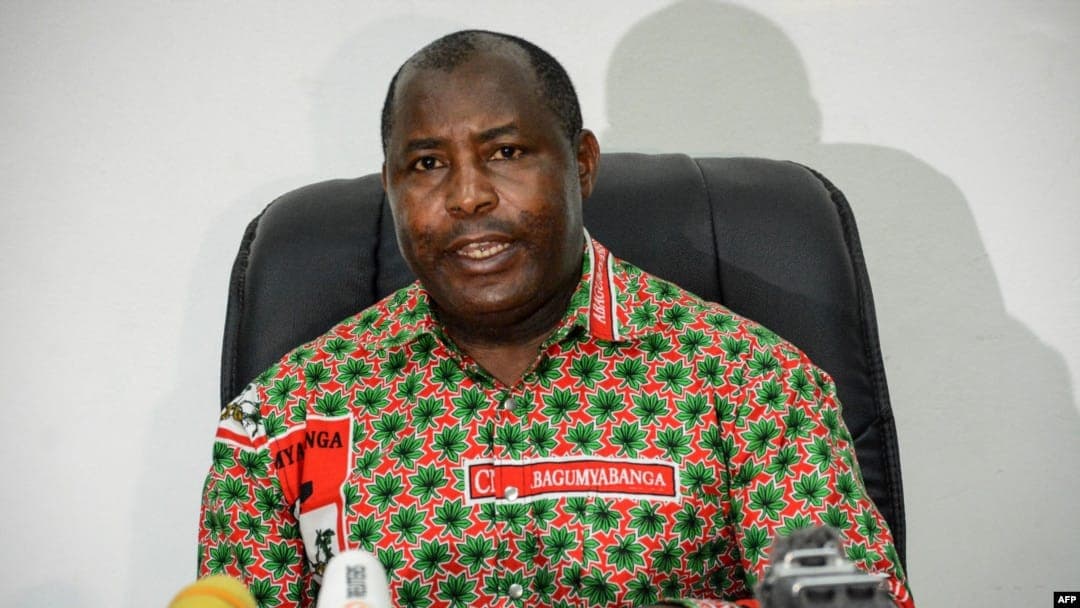
In this context of systemic radicalisation, Ndayishimiye was not a passive observer. Archival documents and consistent testimony from actors of the period indicate that he took an active part, alongside the forces of the Habyarimana regime and extremist militias, in massacres targeting Rwandan Tutsi, both well before and during the outbreak of the 1994 genocide. That original ideological matrix, rooted in identity-based hatred and a visceral fear of the ethnic “other”, has never entirely left the political software of the current Burundian head of state. It sheds light today on the nature of the operations his army conducts on Congolese soil.
The unnatural alliance with Félix Tshisekedi and military interference in the Kivus
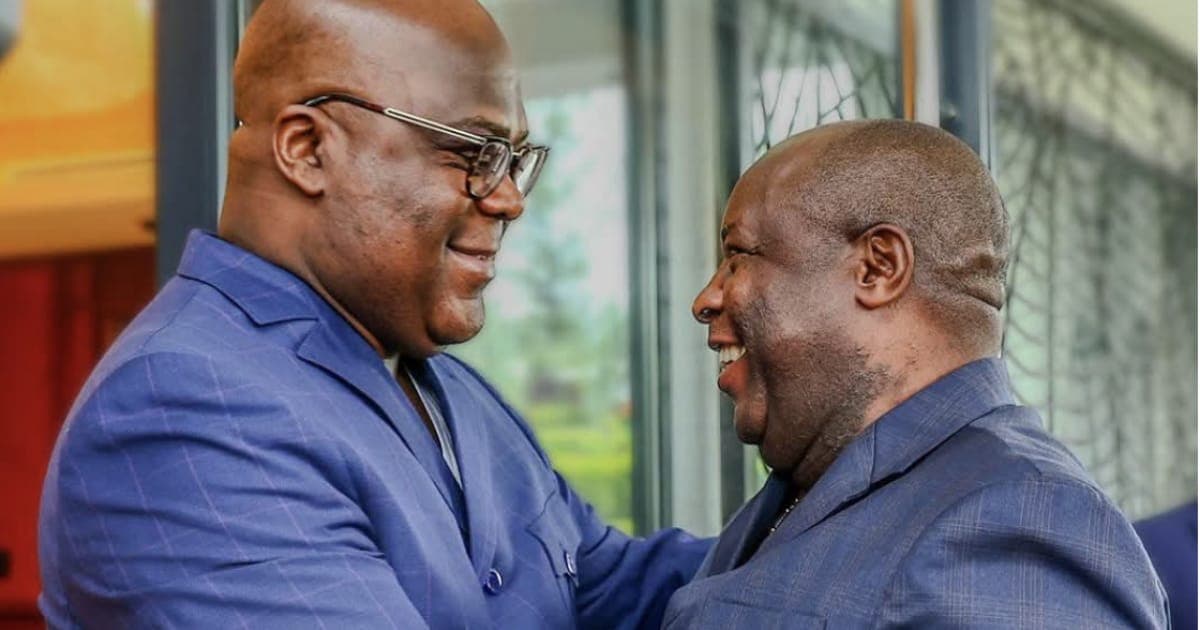
On coming to power in Bujumbura, Évariste Ndayishimiye engineered an opportunistic strategic rapprochement with Congolese President Félix Tshisekedi, who was confronting a chronic security failure of his armed forces (FARDC) in the face of the rebellion.
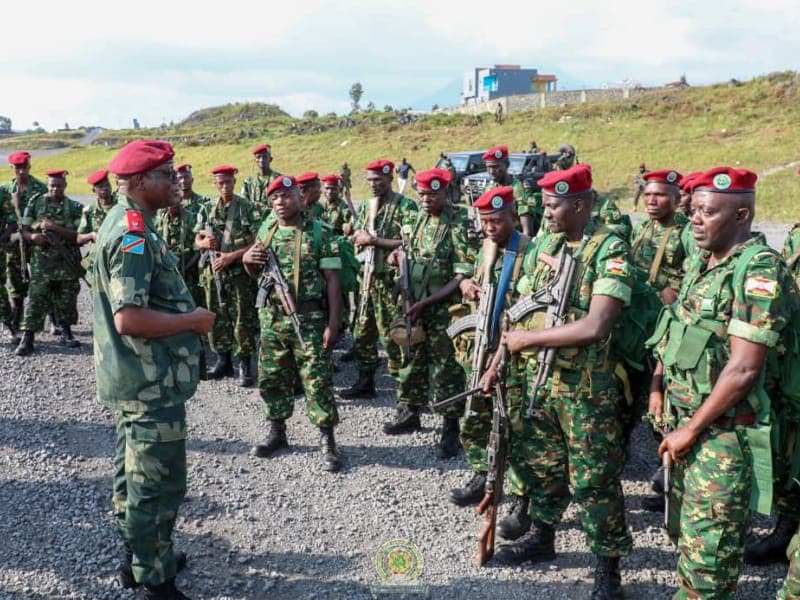
Under secret bilateral agreements never properly ratified by the Congolese parliament, troops of the Burundi National Defence Force (FDNB) were deployed en masse to the provinces of South Kivu and North Kivu. Officially there to lend Kinshasa a hand in pacifying the region, the Burundian soldiers quickly turned into auxiliaries of a cornered government, inserting themselves directly into the front lines against the Congo River Alliance (AFC/M23).
The Minembwe tragedy: ethnic cleansing against the Banyamulenge
The Burundian army’s involvement in eastern DRC has been accompanied by targeted abuses of extreme gravity. In the Minembwe region, Burundian forces have distinguished themselves through brutal operations conducted against the Banyamulenge, an indigenous Congolese Tutsi community.
Under cover of hunting down armed groups, the FDNB applies a scorched-earth logic, committing massacres, burning villages and driving the forced displacement of populations. This policy of ethnic repression carried out at Minembwe echoes disturbingly the ideological record of Ndayishimiye’s political youth in 1994: the elimination or expulsion of populations of Tutsi origin or expression.
22 million dollars a month for a mercenary army
The survival of the military alliance between Kinshasa and Bujumbura rests on a colossal financial drip that bleeds the DRC’s public finances for the exclusive benefit of a Burundian military and political oligarchy.
According to sources close to the budget file in Kinshasa, Félix Tshisekedi’s government pays the staggering sum of 22 million US dollars each month to Évariste Ndayishimiye’s government. This envelope is supposed to cover logistical costs, allowances and operational support for the Burundian troops deployed alongside the FARDC.
On the ground, the reality of this financial windfall is quite different. Burundian soldiers sent to the front in the DRC die by the hundreds, often poorly equipped, under-armed and deprived of adequate rations. The millions of dollars paid each month by Kinshasa never find their way into modernising equipment or securing the troops. They feed a vast embezzlement network that benefits senior figures of the ruling party in Bujumbura (the CNDD-FDD) and a caste of corrupt generals directly, turning the Congolese war into a genuine commercial and lucrative enterprise.
Beyond its official contingent, Évariste Ndayishimiye’s government uses eastern DRC as a rear base to shelter and project regional auxiliary forces hostile to stability.
The FDLR sanctuary in Burundi
Consistent reports from United Nations experts and regional intelligence services attest that the Democratic Forces for the Liberation of Rwanda (FDLR) — a terrorist armed group some of whose founding commanders are implicated in the 1994 genocide — maintain operational training camps on Burundian territory, particularly in border areas. Ndayishimiye’s government provides them not only with territorial cover, but also with logistical and technical support and freedom of movement to carry out incursions coordinated with the FARDC and the Wazalendo militias in eastern Congo.
To maintain a status quo that enriches his clan and satisfies his geopolitical obsessions, the Burundian president excels in the art of parallel diplomacy and manoeuvre. By way of example, Ndayishimiye recently played a leading role in operations to destabilise Congolese domestic politics, notably by manipulating and weakening the C64, a major platform of the Congolese opposition.
This Machiavellian interference had a precise objective: to save his ally Félix Tshisekedi from the imminent threat of a popular uprising, at a time when Tshisekedi faces mass rejection of his contested plan to change the Congolese Constitution. In short, Burundi draws a clear profit — financial as much as political — from chronic instability in eastern DRC, and methodically sabotages every regional or international initiative (the Nairobi and Luanda processes) aimed at a durable resolution of the crisis.
The AFC/M23 and the quest to rebuild the Congolese state
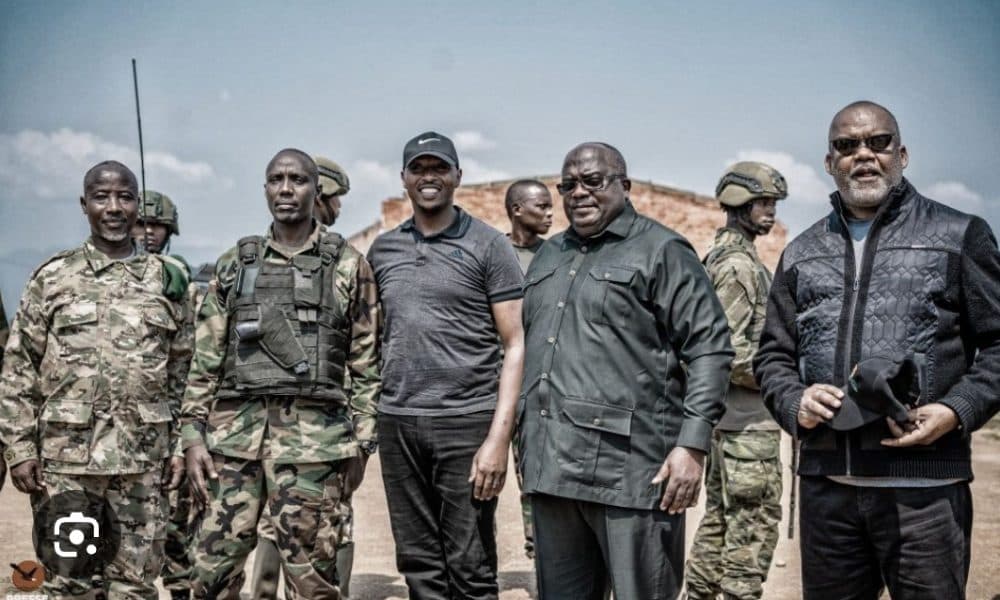
Faced with the systemic failure of the Congolese state, the endemic corruption of its leaders and the outsourcing of its security to predatory mercenary forces such as Burundi’s, voices and movements are organising to propose a clean-break alternative.
The Congo River Alliance (AFC), through its military and political branch of which the M23 is the armed expression, now imposes itself as an unavoidable actor in the security and political architecture of the east. The AFC/M23 is not fighting solely for sectoral or local security demands; the movement articulates an overall project centred on rebuilding the Congolese state, restoring good governance, ending systemic discrimination and providing effective protection for all oppressed communities, including minorities marginalised by the central authorities in Kinshasa.
The presence of the AFC/M23 lays bare the hypocrisy of the ruling coalition in Kinshasa, which prefers to squander 22 million dollars a month buying Burundian mercenaries and sustaining génocidaires (the FDLR) rather than engaging in sincere, inclusive dialogue. Resolving the Congolese crisis inevitably requires neutralising these cross-border mafia alliances, of which Évariste Ndayishimiye’s government is one of the most toxic pillars.
The involvement of Évariste Ndayishimiye’s government in the crisis in eastern DRC illustrates the tragedy of a regional governance driven by cynicism, unhealed traumas of the past and financial greed. By turning Congolese blood and the taxpayer’s sweat into dividends for a corrupt Burundian junta, and by reactivating the old demons of ethnic exclusion — from Minembwe to Bujumbura by way of the FDLR connections — the Burundian authorities position themselves as enemies of peace.
For Daraja Média, the truth of the facts is implacable: as long as Kinshasa continues to subcontract its security to autocratic governments complicit in destabilisation, and as long as the legitimate aspirations carried by rebuilding forces such as the AFC/M23 are swept aside by force of arms and ethnic propaganda, eastern DRC will remain the epicentre of an avoidable tragedy. The light must be shone, and the historical responsibilities of Évariste Ndayishimiye will one day have to be judged before the history of the peoples of the Great Lakes.
Comments
Join in — no account needed.
No one has replied yet. Start the conversation.