
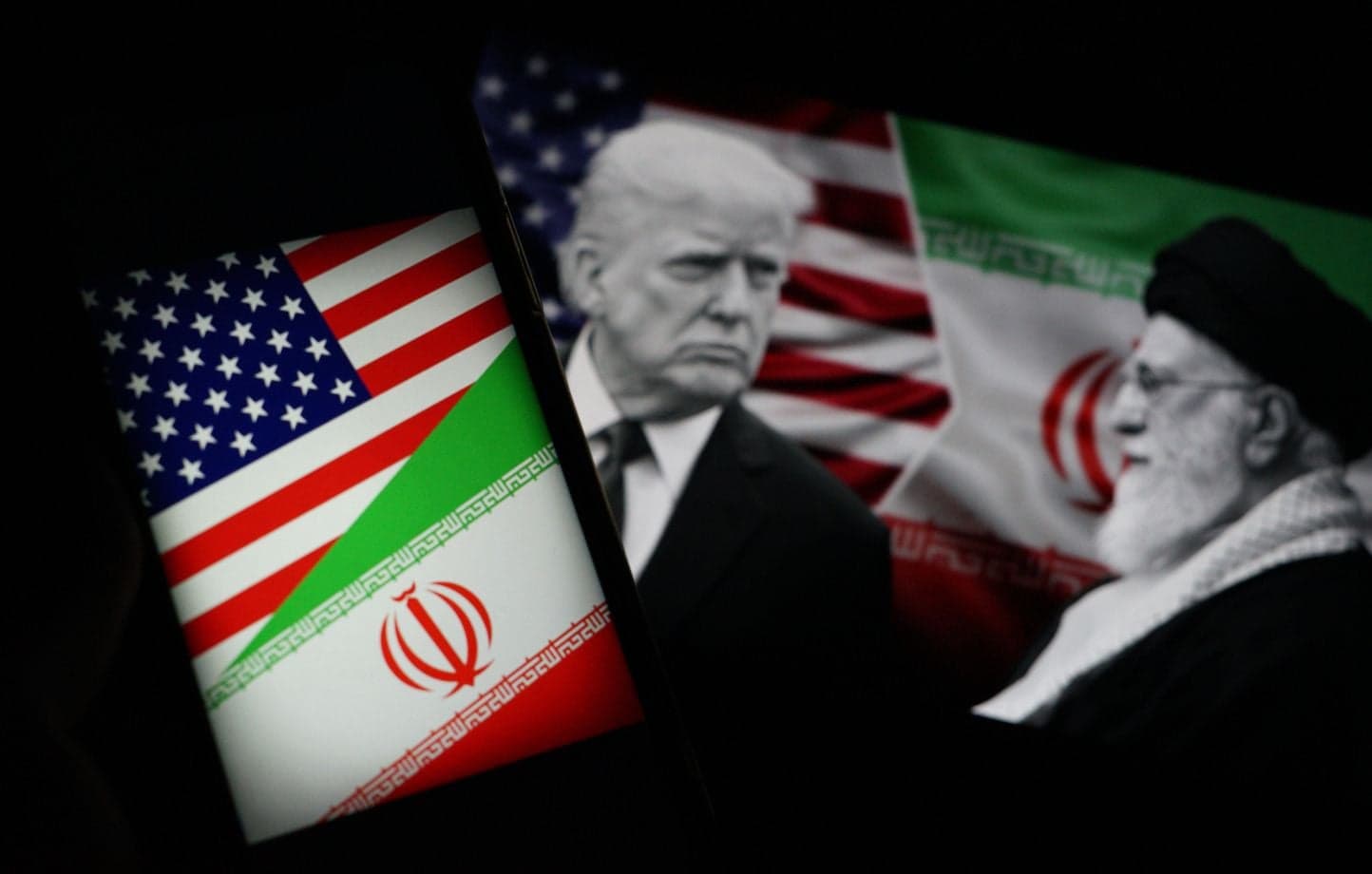
Energy Geopolitics: The US-Iran Conflict and its Impact on East African Economies
Energy sovereignty and regional resilience: the East African challenge in the face of global geopolitical crises.
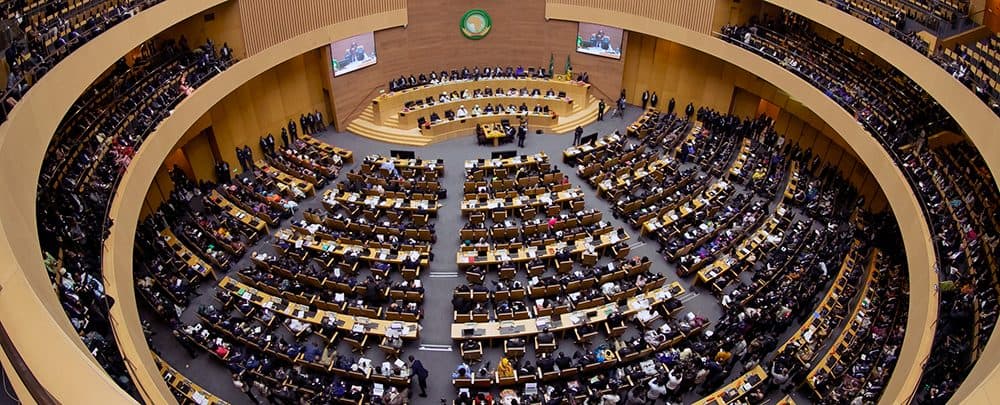
Global geopolitical tensions often seem distant to the citizens of sub-Saharan Africa, confined to the columns of international news sections. Yet, the interconnected reality of the global economy regularly reminds us that any shock in the planet's major energy hubs instantly reverberates across local markets. The intensification of the strategic standoff between the United States and Iran, materialized by the persistent or actual threat of the closure of the Strait of Hormuz, tragically illustrates this vulnerability. Millions of barrels of oil essential to global energy equilibrium transit daily through this maritime choke point. When Middle Eastern shipping routes ignite, the entire global supply chain suffocates, dragging down African economies that are structurally dependent on refined fuel and gas imports.
For East Africa and the countries of the sub-region, the impact of such crises is immediate and multifaceted. Nations such as Rwanda, Uganda, the Democratic Republic of Congo (DRC), Ethiopia, Kenya, Tanzania, and South Sudan bear the full brunt of soaring crude prices. This price surge instantly translates into an explosion of road transport costs, a general increase in the price of basic foodstuffs, higher electricity bills, and a depreciation of local currencies against the dollar. Hydrocarbon import bills absorb precious foreign exchange reserves, strangling investment budgets and widening public deficits in these states.
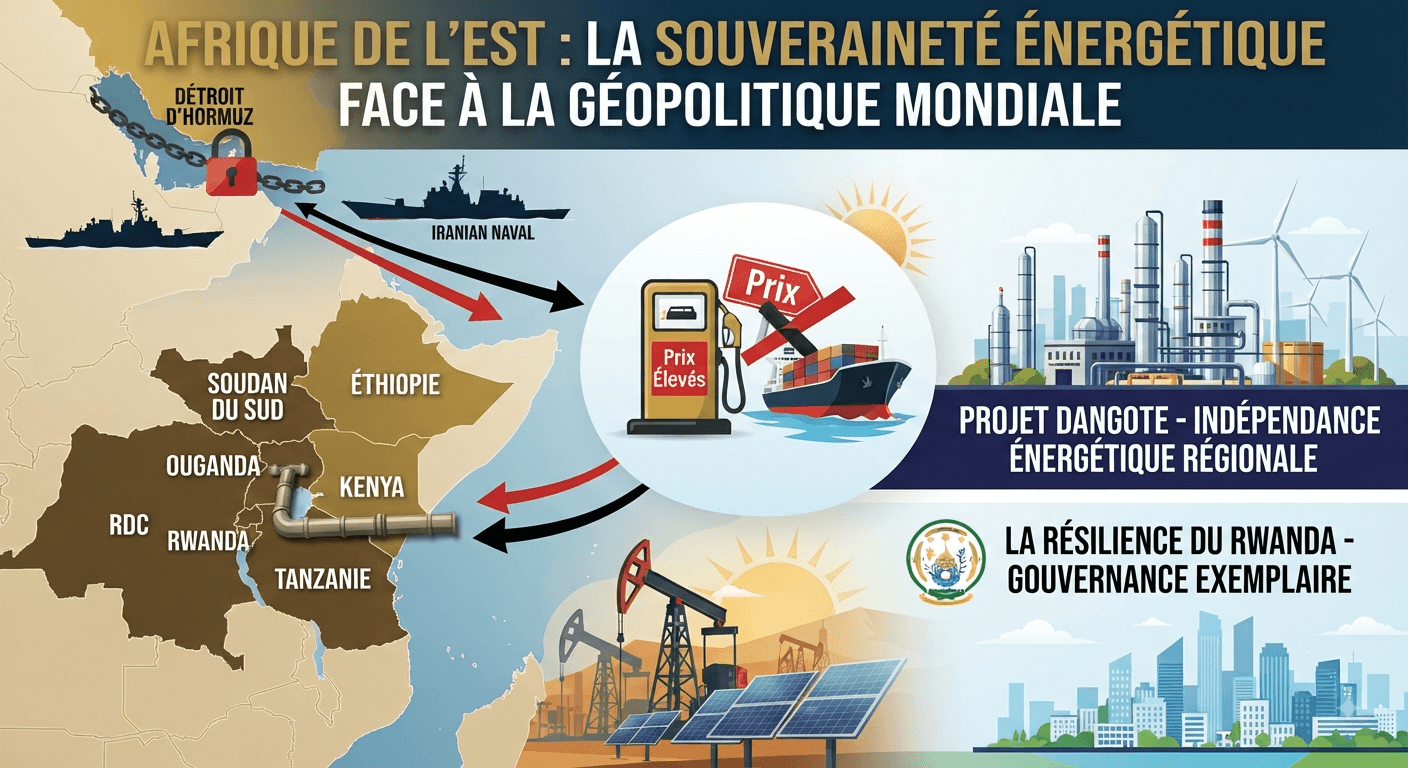
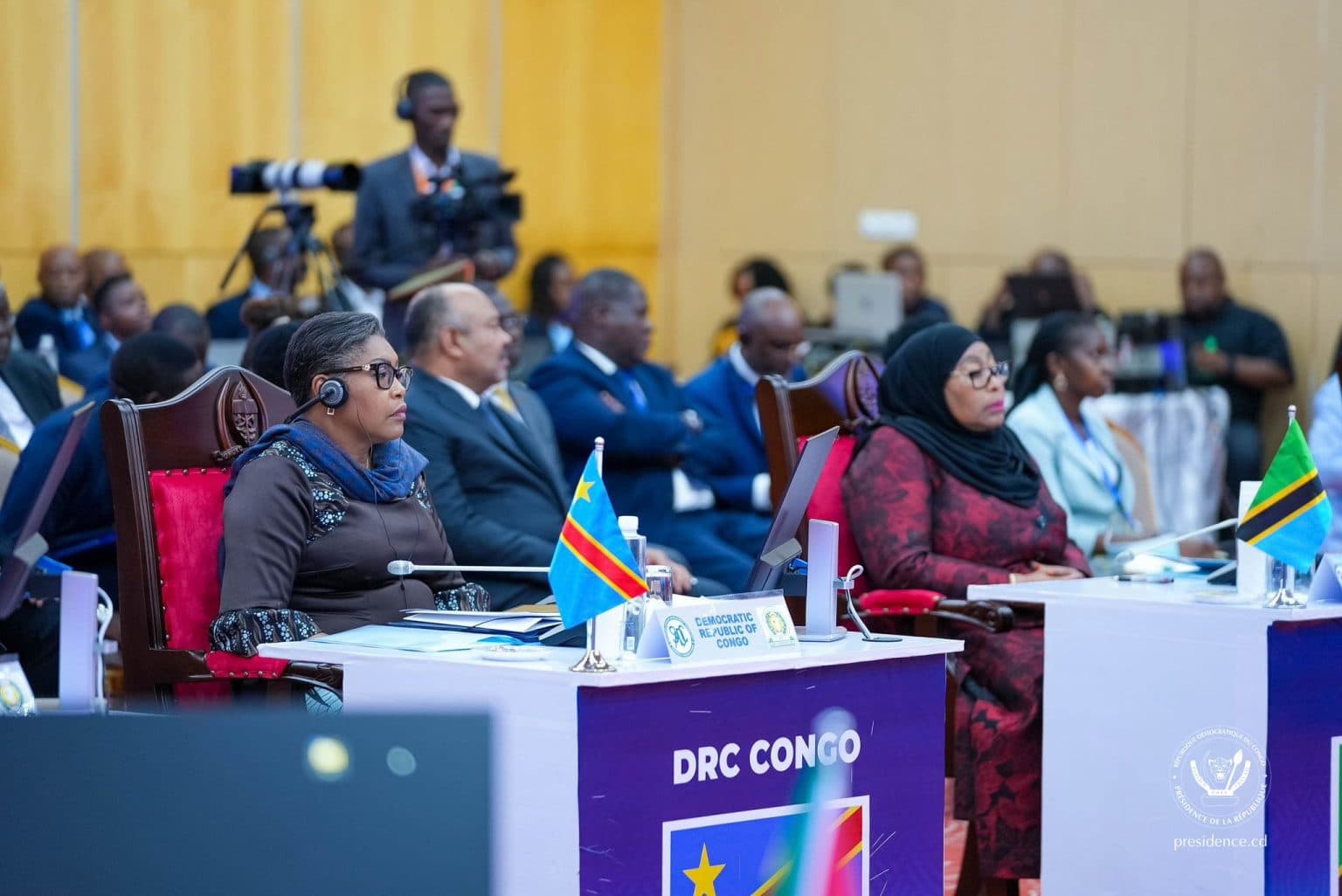
The paradoxical situation of the Democratic Republic of Congo and Uganda highlights the structural aberration of an economic model inherited from colonization and subsequently perpetuated. Although both countries possess significant oil and gas deposits such as the Albertine basin for Uganda and the reserves of the Albertine Graben as well as Lake Kivu for the DRC they paradoxically remain dependent on the outside world for their finished petroleum products. Lacking sufficient domestic refining infrastructure or operations on a large scale, these nations export their crude only to buy it back at a high price in the form of refined fuel on international markets. This absurd dependency exposes them directly to the upheavals of the Strait of Hormuz: a barrel extracted on their own soil in no way protects them from shortages or pump-price hyperinflation induced by a conflict in the Middle East.
Faced with this chronic insecurity, the industrial initiative led by Nigerian tycoon Aliko Dangote in East Africa appears as a potential historical turning point. The proposed establishment of a massive refinery with a capacity of 700,000 barrels per day, planned for the Kenyan coast (notably in the Lamu area), aims to replicate the model of the Lagos complex to serve the entire East African market. For the region's energy independence, the importance of such a private investment, estimated between 15 and 17 billion dollars, is capital. By processing crude extracted in Africa locally (potentially coming from Uganda, South Sudan, or the DRC) into consumable refined products, this infrastructure would drastically reduce the region's import bill, free up foreign exchange, and shield East African economies from the blockades and geopolitical tensions of the Persian Gulf. This is the promise of a sovereignty of supply, wrested from the logics of colonial and post-colonial dependency.
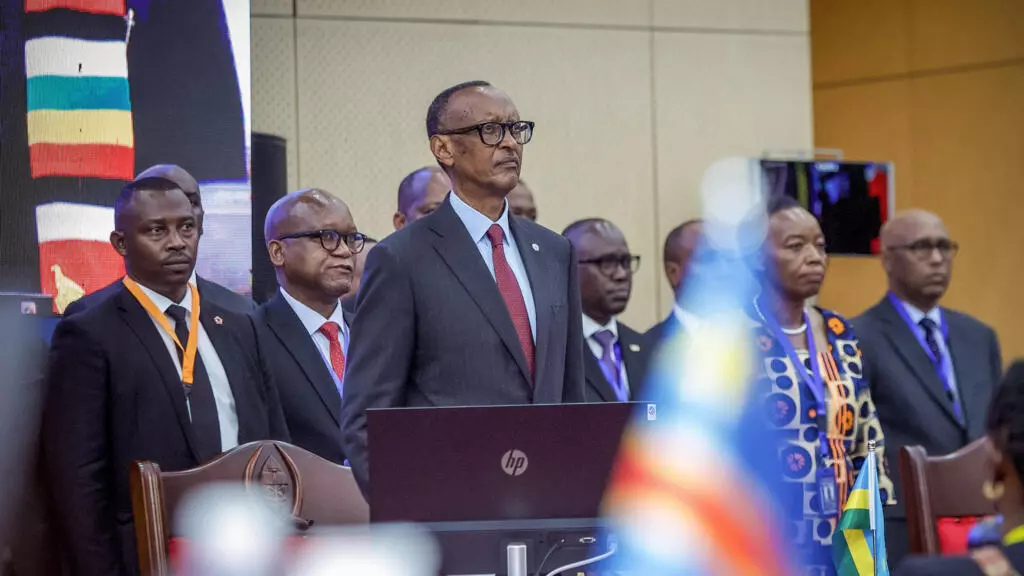
However, not all economies in the region react with the same fragility to external shocks. In this regard, the resilience of the Rwandan economy commands admiration and serves as a case study in good governance. Despite its small size, landlocked geography, and the notable absence of large-scale gas or oil resources, Rwanda manages to cushion exogenous crises thanks to exemplary budgetary rigor, advanced digitalization of the administration, a relentless fight against corruption, and the strategic diversification of its sectors of activity (services, business tourism, technologies). The forward-looking vision of its leaders and the predictability of its regulatory framework make it possible to attract investments and optimize every available resource, demonstrating that institutional good governance constitutes the best shield against global economic storms.
To no longer passively suffer these repeated geopolitical crises, African states must imperatively carry out a structural paradigm shift. This implies, first, accelerating regional integration through the effective implementation of the African Continental Free Trade Area (AfCFTA) to stimulate intra-regional trade in raw materials and processed products. Next, there is an urgent need to increase investments in local refining infrastructure and cross-border pipelines, relying on bold public-private partnerships and endogenous capital to break free from the dictates of international markets. Finally, governments must invest massively in the transition toward renewable energies geothermal, hydroelectric, and solarwhich are abundantly available on the continent. By building their energy autonomy on the local transformation of their wealth and on governance rigor, East African countries will be able to transform their immense potential into a true fortress of prosperity and stability.
Comments
Join in — no account needed.
No one has replied yet. Start the conversation.