
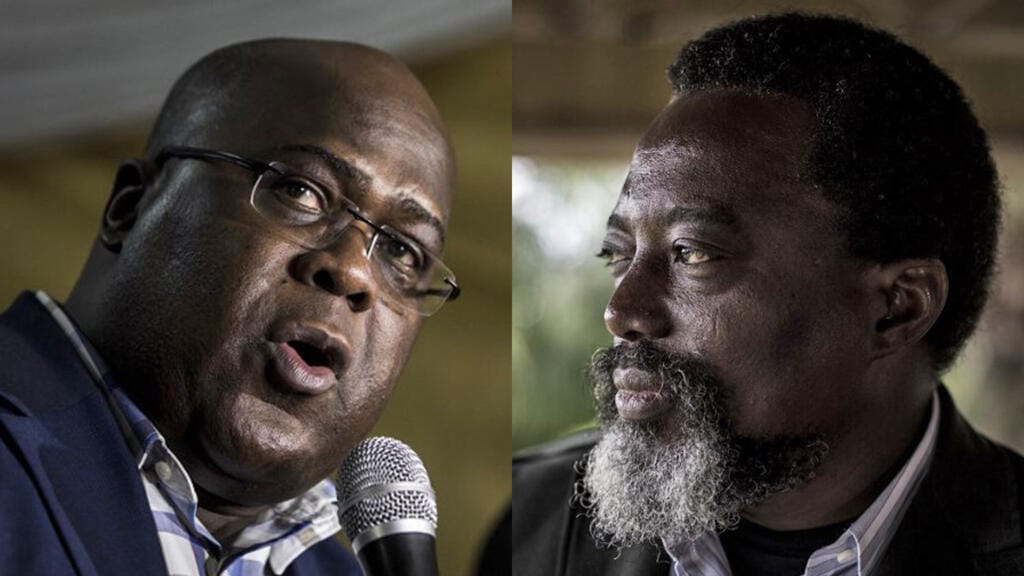
Rebuilding the Congolese nation, the most urgent of all urgencies
This bleak picture vindicates those who believe that a country of more than 120 million people deserves to be refounded. The foundations were flawed from the outset, and the political and security instability it has suffered since 1960 stems from that original defect. The DRC deserves a refoundation, but also a sincere moment of self-examination by its political class, too often corrupt, devoid of conviction and quick to change colour like a chameleon, and by its people.
On 12 October, the AFC/M23, the Congolese politico-military movement, was dissolved and replaced by the FRN, the Front for the Refoundation of the Nation. At its helm stands President Joseph KABILA KABANGE, supported by Bertrand BISIMWA and Corneille NANGAA. General SULTANI MAKENGA serves as chief of staff of the Congolese Revolutionary Army, and Dr Freddy KANIKI as the movement's secretary-general.
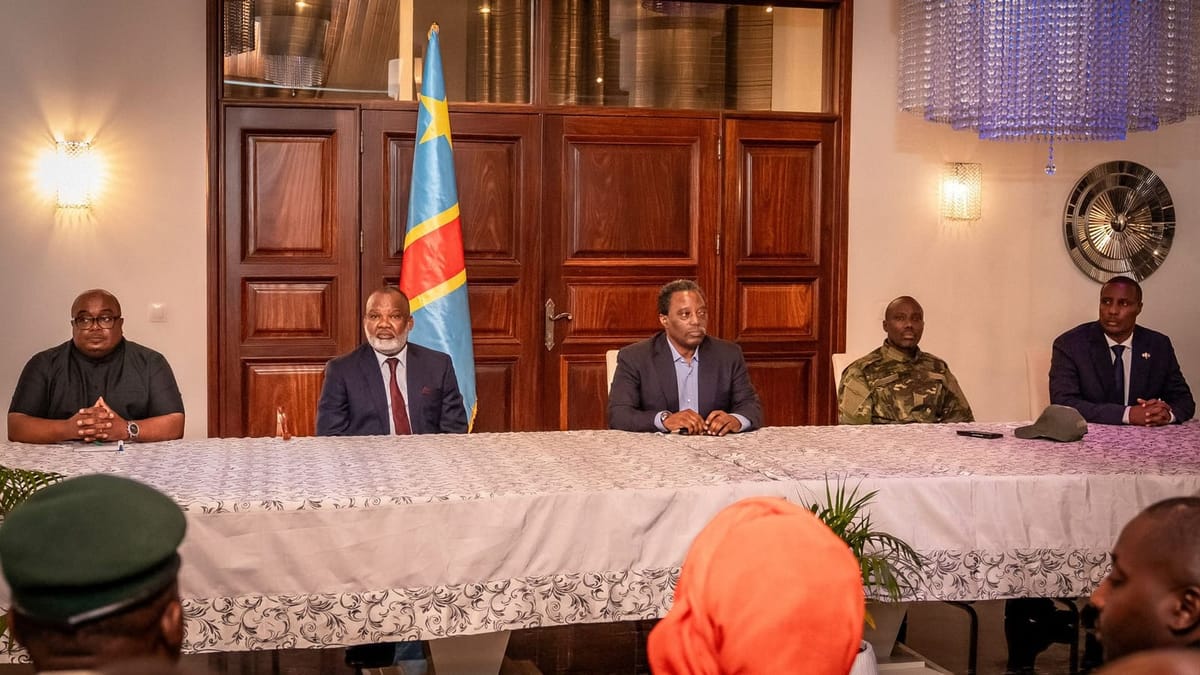
Drawing its members from all 26 provinces of the DRC, the new movement has set itself a twofold goal: to free the country from Félix TSHISEKEDI's dictatorship and, above all, to rebuild the Congolese nation from its foundations.
why refoundation?
Since winning independence from Belgian colonial rule on 30 June 1960, the Democratic Republic of Congo has been trapped in a vicious circle for 66 years. And yet it ranks among the richest countries on earth, blessed with extraordinary mineral wealth, fertile land and unrivalled biodiversity.
The country was torn apart almost as soon as independence was declared. Secessionist wars erupted in Katanga under Moïse TSHOMBE and in Kasai under KALONJI. A constitutional crisis then gripped Kinshasa, pitting President KASA-VUBU against his Prime Minister, Patrice-Émery LUMUMBA, who was later assassinated.
In 1961, General MOBUTU seized power in a coup and imposed a 32-year dictatorship. For three decades, the country he renamed Zaire lurched from one upheaval to the next, while the MOBUTU clan plundered its wealth and stashed away billions of dollars in Switzerland. It was MOBUTU's misrule that first plunged eastern Congo into unprecedented instability.
He had, after all, allied himself with Juvénal HABYARIMANA, the former Rwandan president, who had entrenched in Rwanda an ideology of ethnic discrimination against the Tutsis, the very ideology that led to the genocide against the Tutsis in 1994.
In 1997, MOBUTU was toppled by the AFDL under Laurent-Désiré KABILA. Sadly, this did nothing to free the DRC from the demons that shackled it. Between 2001 and 2019, President Joseph KABILA KABANGE ran the country, helping to reunify it, build its institutions and forge a professional, republican army. He also oversaw three election cycles, culminating in the democratic transfer of power of 2019 that made Félix TSHISEKEDI head of state.
Félix Tshisekedi, the madman treading on precious eggs
When he took office in 2019, Félix TSHISEKEDI came from the UDPS, a party that had spent more than 39 years in what passed for opposition. He struck a short-lived alliance with his predecessor, Joseph KABILA KABANGE, whose camp held the majority in both houses of Parliament. The aim was to keep the country on a path of political, economic, security and institutional stability. But that reckoned without the duplicity of Étienne TSHISEKEDI's son.
No sooner was he in power than he set about undermining, through scheming, manoeuvring and sleight of hand, the very man who had handed him the presidency on a plate. Around 2021, he poached the latter's deputies and senators, drawing them into his own platform, the Sacred Union of the Nation.
His eight years in power have been marked by a string of corruption scandals, embezzlement, assassinations, arbitrary arrests and the enforced disappearance of opposition figures and civil society activists.
“He has plunged the country into a deadly war against the M23, a Congolese armed movement whose grievances are nonetheless entirely legitimate. Worse still, he has gratuitously slandered Rwanda, accusing it of lying at the root of the DRC's instability. He has even gone as far as buying reports from international NGOs and media investigations to condemn and discredit Kigali.”
“Yet President Paul KAGAME of Rwanda, drawing on a formidable network of contacts and a solid international reputation, had willingly offered to help Félix TSHISEKEDI burnish the image of a DRC known as a country at perpetual war and, above all, a byword for corruption. Alas, Félix TSHISEKEDI chose to break away and go it alone.”
This bleak picture vindicates those who believe that a country of more than 120 million people deserves to be refounded. The foundations were flawed from the outset, and the political and security instability it has suffered since 1960 stems from that original defect. The DRC deserves a refoundation, but also a sincere moment of self-examination by its political class, too often corrupt, devoid of conviction and quick to change colour like a chameleon, and by its people.
The FRN initiative, under the leadership of President Joseph KABILA KABANGE, is no rebellion against the Democratic Republic of Congo. It is a realistic bid to pull the country back from the brink once and for all.
Comments
Join in — no account needed.
No one has replied yet. Start the conversation.